| Jumlah populasi | |
|---|---|
| 25,000 - 46,000 | |
| Daerah dengan populasi signifikan | |
 Makau Makau | 8,000 |
 Portugal Portugal | 5,000 |
 Brasil Brasil | 25,000 |
 Amerika Serikat Amerika Serikat | 15,000 |
 Kanada Kanada | 12,000 |
 Peru Peru | 10,000 |
| Bahasa | |
| Portugis · Kanton · Makau | |
| Agama | |
| Katolik Roma | |
| Kelompok etnik terkait | |
| Diaspora Portugis | |

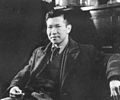
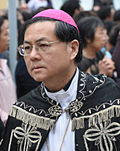

Orang Makau (bahasa Portugis: Macaense; Hanzi: 土生葡人; harfiah: 'orang asli kelahiran Portugis') adalah sebuah kelompok etnis yang berasal dari Makau sejak abad ke-16, yang kebanyakan terdiri dari orang-orang dengan beberapa keturunan Portugis.[2][3]
Budaya
suntingDalam sejarah, beberapa etnis Makau berbicara dengan bahasa Patuá, yang merupakan sebuah bahasa kreol yang berdasarkan pada bahasa Portugis dan sekarang secara virtual telah punah. Beberapa orang berbicara dalam bahasa Portugis dan Kanton. Orang Makau menghidangkan masakan Makau yang distinsif.
Sejarah
suntingPeriode Portugis
suntingBudaya Portugis mendominasi orang Makau, namun susunan kebudayaan Tionghoa juga signifikan. Masyarakatnya berakting sebagai antar-wajah antara pemerintah kolonial yang berkuasa - orang-orang Portugis dari Portugal yang mengetahui bahasa Tionghoa hanya sedikit - dan mayoritas Tionghoa (95% dari populasi) yang sama-sama sedikit yang mengetahui bahasa Portugis. Kebanyakan orang Makau memiliki warisan Portugis pihak ayah sampai 1974. Beberapa diantaranya adalah pria Portugis yang dibawa ke Makau sebagai bagian dari layanan militer mereka. Beberapa diantaranya tinggal di Makau setelah ekspirasi dari layanan militer mereka, menikahi wanita Makau.
Selain wanita Tionghoa yang dinikahi Portugis, kebanyakan wanita Goa, Ceylon (sekarang Sri Lanka), Indo China, Melayu, dan Jepang dijadikan istri pria Portugis di Makau.[4][5][6][7] Gadis-gadis Jepang dibawah dari Jepang oleh pria Portugis.[8] Beberapa orang Tionghoa yang menjadi orang Makau dipindahkan ke agama Katolik, dan yang tidak memiliki darah Portugis, berasimilasi dengan orang Makau sejak mereka ditolak dengan Tionghoa non Kristen.[9] Kebanyakan pernikahan antara orang Portugis dan orang pribumi adalah antara pria Portugis dan wanita asal Tanka, yang dianggap sebagai orang kelas paling rendah di China dan memiliki hubungan dengan pemukim dan pelaut Portugis, atau wanita Tionghoa kelas rendah.[10] Pria Barat seperti Portugis ditolak oleh wanita Tionghoa kelas tinggi, yang tidak menikahi orang asing.[11] Sastra dalam bahasa Makau menulis tentang hubungan percintaan dan pernikahan antara wanita Tanka dan pria Portugis, seperti "A-Chan, A Tancareira", karya Henrique de Senna Fernandes.[12][13][14][15]
Pada akhir abad ke sembilan belas, dan pada saat rezim Estado Novo yang dipimpin oleh Salazar, mengirim kebanyakan orang Makau ke Portugis untuk dimasukkan ke sekolah-sekolah Portugis, berpartisipasi dalam layanan militer mandatori (beberapa bertempur di Afrika) dan mempraktikan kepercayaan Katolik. Pada 1980an, kebanyakan orang Makau tidak mendapatkan pembelajaran bahasa Tionghoa yang formal dan bisa berbicara tapi tidak bisa membaca dan menulis bahasa Tionghoa. Pemakaian bahasa Kanton secara besar familiar, dan beberapa pemakai bahasa tersebut menggunakan dengan aksen wilayah (鄉下話) - yang sebagian besar berasal dari ibu mereka atau amah.[16]
Orang Makau terkenal
suntingSeni & Penulisan
sunting- José dos Santos Ferreira - penyair
- Henrique de Senna Fernandes - pengacara/penulis
Hiburan
sunting- 李嘉欣 Michelle Monique Reis - Miss Hong Kong 1988, socialite dan aktris
- 肥媽 Maria Cordero - penyanyi/aktris
- Alexander Lee Eusebio, mantan anggota U-KISS dan sekarang artis solo.
- 嘉碧儀 Cerina Filomena da Graça - finalis Miss Hong Kong, aktris
- 祖·尊尼亞 Joe Junior (nama asli: Jose Maria Rodrigues Jr.) - penyanyi veteran & aktor TV
- Pedruco Bersaudari - sebuah keluarga dari 4 bersaudari Makau yang berkompetisi di kontes kecantikan Miss Chinese International dan kontes kecantikan Miss World mewakili Makau.
- 梁洛施 Luisa Isabella Nolasco da Silva - aktris, penyanyi, dan peragawati asal Hong Kong
- Michelle Thang - Mantan peragawati Australia, sekarang berpengaruh dalam industri perbankan dan bekerja dengan berbagai organisasi amal.
Fesyen
suntingPolitik, Militer dan Bisnis
sunting- Kolonel Vicente Nicolau de Mesquita, seorang komantan dari sebuah kelompok yang terdiri dari 36 prajurit Portugis, yang memenangkan pertempuran Passaleão, yang terjadi di dekat Portas do Cerco, melawan 400 prajurit Tionghoa, pada 25 Agustus 1849.
- 羅保議員 Sir Roger Lobo, seorang pengusaha, mantan anggota Dewan Legislatif Hong Kong dan mantan anggota Dewan Perkotaan, dari keluarga Lobo di Makau.
- 沙利士 Arnaldo de Oliveira Sales, mantan anggota dan ketua Dewan Perkotaan, mantan presiden Komite Olimpiade Hong Kong dan mantan presiden Club Lusitano de Hong Kong.
- José Pedro Braga - manajer Hong Kong Telegraph antara 1902 dan 1910, ketua Perusahaan Kekuatan dan Penerangan China pada 1934 dan 1938 dan anggota Portugis pertama dari Dewan Legislatif Hong Kong, antara 1929 dan 1937.
- 黎婉華 Clementina Leitão, istri dari Stanley Ho yang telah menjadi almarhumah. Juga merupakan anggota salah satu keluarga paling menengah di Makau pada masa pra-PDII
- 陳麗敏 Florinda da Rosa Silva Chan, Sekretaris untuk Administrasi dan Keadilan saat ini
Catatan
sunting- ^ "Salinan arsip". Diarsipkan dari asli tanggal 2018-08-18. Diakses tanggal 2015-03-29.
- ^ Teixeira, Manuel (1965),Os Macaenses, Macau: Imprensa Nacional; Amaro, Ana Maria (1988), Filhos da Terra, Macau: Instituto Cultural de Macau, pp. 4–7; and Pina-Cabral, João de and Nelson Lourenço (1993), Em Terra de Tufões: Dinâmicas da Etnicidade Macaense, Macau: Instituto Cultural de Macau, for three varying, yet converging discussions on the definition of the term Macanese. Also particularly helpful is Review of Culture No. 20 July/September (English Edition) 1994, which is devoted to the ethnography of the Macanese.
- ^ Marreiros, Carlos (1994), "Alliances for the Future" in Review of Culture, No. 20 July/September (English Edition), pp. 162–172.
- ^ Annabel Jackson (2003). Taste of Macau: Portuguese Cuisine on the China Coast (Edisi illustrated). Hong Kong University Press. hlm. x. ISBN 962-209-638-7. Diakses tanggal 2014-02-02.
- ^ João de Pina-Cabral (2002). Between China and Europe: person, culture and emotion in Macao. Vol. Volume 74 of London School of Economics monographs on social anthropology (Edisi illustrated). Berg. hlm. 39. ISBN 0-8264-5749-5. Diakses tanggal 2012-03-01.
To be a Macanese is fundamentally to be from Macao with Portuguese ancestors, but not necessarily to be of Sino-Portuguese descent. The local community was born from Portuguese men. ... but in the beginning the woman was Goanese, Siamese, Indo-Chinese, Malay - they came to Macao in our boats. Sporadically it was a Chinese woman.
; - ^ C. A. Montalto de Jesus (1902). Historic Macao (Edisi 2). Kelly & Walsh, Limited. hlm. 41. Diakses tanggal 2014-02-02.
- ^ Austin Coates (2009). A Macao Narrative. Vol. Volume 1 of Echoes: Classics of Hong Kong Culture and History. Hong Kong University Press. hlm. 44. ISBN 962-209-077-X. Diakses tanggal 2014-02-02.
- ^ Camões Center (Columbia University. Research Institute on International Change) (1989). Camões Center Quarterly, Volume 1. Vol. Volume 1 of Echoes: Classics of Hong Kong Culture and History. The Center. hlm. 29. Diakses tanggal 2014-02-02.
- ^ João de Pina-Cabral (2002). Between China and Europe: person, culture and emotion in Macao. Vol. Volume 74 of London School of Economics monographs on social anthropology (Edisi illustrated). Berg. hlm. 39. ISBN 0-8264-5749-5. Diakses tanggal 2012-03-01.
When we established ourselves here, the Chinese ostracized us. The Portuguese had their wives, then, that came from abroad, but they could have no contact with the Chinese women, except the fishing folk, the tanka women and the female slaves. Only the lowest class of Chinese contacted with the Portuguese in the first centuries. But later the strength of Christianization, of the priests, started to convince the Chinese to become Catholic. ... But, when they started to be Catholics, they adopted Portuguese baptismal names and were ostracized by the Chinese Buddhists. So they joined the Portuguese community and their sons started having Portuguese education without a single drop of Portuguese blood.
; - ^ João de Pina-Cabral (2002). Between China and Europe: person, culture and emotion in Macao. Vol. Volume 74 of London School of Economics monographs on social anthropology (Edisi illustrated). Berg. hlm. 164. ISBN 0-8264-5749-5. Diakses tanggal 2012-03-01.
I was personally told of people that, to this day, continue to hide the fact that their mothers had been lower-class Chinese women - often even tanka (fishing folk) women who had relations with Portuguese sailors and soldiers.
; - ^ João de Pina-Cabral (2002). Between China and Europe: person, culture and emotion in Macao. Vol. Volume 74 of London School of Economics monographs on social anthropology (Edisi illustrated). Berg. hlm. 165. ISBN 0-8264-5749-5. Diakses tanggal 2012-03-01.
In fact, in those days, the matrimonial context of production was usually constituted by Chinese women of low socio-economic status who were married to or concubies of Portuguese or Macanese men. Very rarely did Chinese women of higher status agree to marry a Westerner. As Deolinda argues in one of her short stories,"8 should they have wanted to do so out of romantic infatuation, they would not be allowed to
; - ^ João de Pina-Cabral (2002). Between China and Europe: person, culture and emotion in Macao. Vol. Volume 74 of London School of Economics monographs on social anthropology (Edisi illustrated). Berg. hlm. 164. ISBN 0-8264-5749-5. Diakses tanggal 2012-03-01.
Henrique de Senna Fernandes, another Macanese author, wrote a short story about a tanka girl who has an affair with a Portuguese sailor. In the end, the man returns to his native country and takes their little girl with him, leaving the mother abandoned and broken-hearted. As her sailorman picks up the child, A-Chan's words are: 'Cuidadinho ... cuidadinho' ('Careful ... careful'). She resigns herself to ther fate, much as she may never have recovered from the blow (1978).
; - ^ Christina Miu Bing Cheng (1999). Macau: a cultural Janus (Edisi illustrated). Hong Kong University Press. hlm. 173. ISBN 962-209-486-4. Diakses tanggal 2012-03-01.
Her slave-like submissiveness is her only attraction to him. A-Chan thus becomes his slave/mistress, an outlet for suppressed sexual urges. The story is an archetypical tragedy of miscegenation. Just as the Tanka community despises A-Chan's cohabitation with a foreign barbarian, Manuel's colleagues mock his 'bad taste' ('gosto degenerado') (Senna Fernandes, 1978: 15) in having a tryst with a boat girl.
- ^ Christina Miu Bing Cheng (1999). Macau: a cultural Janus (Edisi illustrated). Hong Kong University Press. hlm. 173. ISBN 962-209-486-4. Diakses tanggal 2012-03-01.
As such, the Tanka girl is nonchalantly reified and dehumanized as a thing ( coisa). Manuel reduces human relations to mere consumption not even of her physical beauty (which has been denied in the description of A-Chan), but her 'Orientalness' of being slave-like and submissive.
- ^ Christina Miu Bing Cheng (1999). Macau: a cultural Janus (Edisi illustrated). Hong Kong University Press. hlm. 170. ISBN 962-209-486-4. Diakses tanggal 2012-03-01.
We can trace this fleeting and shallow relationship in Henrique de Senna Fernandes' short story, A-Chan, A Tancareira, (Ah Chan, the Tanka Girl) (1978). Senna Fernandes (1923-), a Macanese, had written a series of novels set against the context of Macau and some of which were made into films.
- ^ Of interest is the role that the amah plays in Macanese society. It is well known that local Cantonese women were often hired by the Catholic Church in Macau to act as wet-nurses for orphans in the Church's charge. These women were also hired by Macanese families to clean their houses, cook meals and care for their children. It is in these early encounters that Macanese children are first introduced to the Cantonese language and culture. Families are known to keep long-standing friendships with their amahs and in the past, young brides would sometimes bring them along with them to their new home. Nowadays Filipinas fill the role. c.f. Soares, José Caetano (1950), Macau e a Assistência (Panorama médico-social), Lisbon, Agência Geral das Colónias Divisão de Publicações e Biblioteca, and Jorge, Edith de (1993), The Wind Amongst the Ruins: A childhood in Macao, New York: Vantage Press.
Daftar pustaka
sunting- Amaro, Ana Maria (1989). O Traje da Mulher Macaense, Da Saraca ao Do das Nhonhonha de Macau. Macau: Instituto Cultural de Macau.
- Amaro, Ana Maria (1993). Filhos da Terra. Macau: Instituto Cultural de Macau.
- Dicks, Anthony R. (1984). "Macao: Legal Fiction and Gunboat Diplomacy" in Leadership on the China Coast, Goran Aijmer (editor), London: Curzon Press, pp. 101–102.
- Guedes, João (1991). As seitas: histôrias do crime e da política em Macau. Macau: Livros do Oriente.
- Marreiros, Carlos (1994). "Alliances for the Future" in Review of Culture No. 20 July/September (English Edition), 162-172.
- Pina Cabral, João de (2002). Between China and Europe: Person, Culture and Emotion in Macao. New York and London: Berg (Continuum Books) - London School Monographs in Social Antrhropology 74.
- Pina Cabral, João de, and Nelson Lourenço (1993). Em Terra de Tufões: Dinâmicas da Etnicidade Macaense. Macau: Instituto Cultural de Macau.
- Porter, Jonathan (1996). Macau, the imaginary city: culture and society, 1557 to the present. Boulder: Westview Press.
- Teixeira, Manuel (1965). Os Macaenses. Macau: Imprensa Nacional.
- Watts, Ian (1997). "Neither Meat nor Fish: Three Macanse Women in the Transition" in Macau and Its Neighbors toward the 21st Century. Macau: University of Macau.
