


This list of space telescopes (astronomical space observatories) is grouped by major frequency ranges: gamma ray, X-ray, ultraviolet, visible, infrared, microwave and radio. Telescopes that work in multiple frequency bands are included in all of the appropriate sections. Space telescopes that collect particles, such as cosmic ray nuclei and/or electrons, as well as instruments that aim to detect gravitational waves, are also listed. Missions with specific targets within the Solar System (e.g., the Sun and its planets), are excluded; see List of Solar System probes and List of heliophysics missions for these, and List of Earth observation satellites for missions targeting Earth.
Two values are provided for the dimensions of the initial orbit. For telescopes in Earth orbit, the minimum and maximum altitude are given in kilometers. For telescopes in solar orbit, the minimum distance (periapsis) and the maximum distance (apoapsis) between the telescope and the center of mass of the Sun are given in astronomical units (AU).
Gamma ray
editGamma-ray telescopes collect and measure individual, high energy gamma rays from astrophysical sources. These are absorbed by the atmosphere, requiring that observations are done by high-altitude balloons or space missions. Gamma rays can be generated by supernovae, neutron stars, pulsars and black holes. Gamma ray bursts, with extremely high energies, have also been detected but have yet to be identified.[1]
| Photo | Name | Space agency | Launch date | Terminated | Location | Ref(s) |
|---|---|---|---|---|---|---|
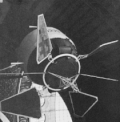 |
Proton-1 | USSR | 16 Jul 1965 | 11 Oct 1965 | Earth orbit (183-589 km) | [2] |
|
Proton-2 | USSR | 2 Nov 1965 | 6 Feb 1966 | Earth orbit (191-637 km) | [2] |
|
Proton-4 | USSR | 16 Nov 1968 | 24 Jul 1969 | Earth orbit (248-477 km) | [3] |
 |
Small Astronomy Satellite 2 (SAS-B) | NASA | 15 Nov 1972 | 8 Jun 1973 | Earth orbit (443–632 km) | [4][5] |
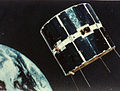 |
Cos-B | ESA | 9 Aug 1975 | 25 Apr 1982 | Earth orbit (339.6–99,876 km) | [6][7][8] |
 |
High Energy Astronomy Observatory 3 | NASA | 20 Sep 1979 | 29 May 1981 | Earth orbit (486.4–504.9 km) | [9][10][11] |
 |
Granat | CNRS & IKI | 1 Dec 1989 | 25 May 1999 | Earth orbit (2,000–200,000 km) | [12][13][14] |
 |
Gamma | USSR, CNES, RSA | 11 Jul 1990 | 1992 | Earth orbit (375 km) | [15] |
 |
Compton Gamma Ray Observatory (CGRO) | NASA | 5 Apr 1991 | 4 Jun 2000 | Earth orbit (362–457 km) | [16][17][18] |
| Low Energy Gamma Ray Imager (LEGRI) | INTA | 19 May 1997 | Feb 2002 | Earth orbit (600 km) | [19][20] | |
 |
High Energy Transient Explorer 2 (HETE 2) | NASA | 9 Oct 2000 | Mar 2008 | Earth orbit (590–650 km) | [21][22][23] |
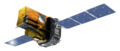 |
International Gamma Ray Astrophysics Laboratory (INTEGRAL) | ESA | 17 Oct 2002 | 28 Feb 2025 | Earth orbit (639–153,000 km) | [24][25] |
 |
Neil Gehrels Swift Observatory | NASA | 20 Nov 2004 | — | Earth orbit (585–604 km) | [26][27] |
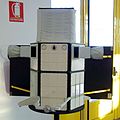 |
Astrorivelatore Gamma ad Immagini Leggero (AGILE) | ISA | 23 Apr 2007 | 18 Jan 2024 | Earth orbit (524–553 km) | [28][29] |
 |
Fermi Gamma-ray Space Telescope | NASA | 11 Jun 2008 | — | Earth orbit (555 km) | [30] |
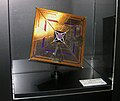 |
Gamma-Ray Burst Polarimeter (IKAROS) | JAXA | 21 May 2010 | 21 May 2015 | Heliocentric orbit | [31][32] |
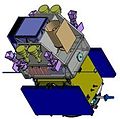 |
Space Variable Objects Monitor (SVOM) | CNSA & CNES | 22 Jun 2024 | — | Earth orbit (625–625 km) | [33][34] |
X-ray
editX-ray telescopes measure high-energy photons called X-rays. These can not travel a long distance through the atmosphere, meaning that they can only be observed high in the atmosphere or in space. Several types of astrophysical objects emit X-rays, from galaxy clusters, through black holes in active galactic nuclei to galactic objects such as supernova remnants, stars, and binary stars containing a white dwarf (cataclysmic variable stars), neutron star or black hole (X-ray binaries). Some Solar System bodies emit X-rays, the most notable being the Moon, although most of the X-ray brightness of the Moon arises from reflected solar X-rays. A combination of many unresolved X-ray sources is thought to produce the observed X-ray background.
| Photo | Name | Space agency | Launch date | Terminated | Location | Ref(s) |
|---|---|---|---|---|---|---|
 |
Uhuru (Small Astronomy Satellite 1, SAS-A) | NASA | 12 Dec 1970 | Mar 1973 | Earth orbit (531–572 km) | [35][36][37] |
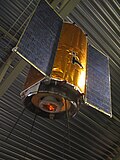 |
Astronomical Netherlands Satellite (ANS) | SRON | 30 Aug 1974 | Jun 1976 | Earth orbit (266–1176 km) | [38][39] |
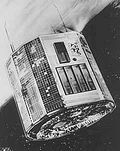 |
Ariel V | SRC & NASA | 15 Oct 1974 | 14 Mar 1980 | Earth orbit (520 km) | [40][41] |
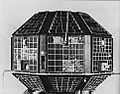 |
Aryabhata | ISRO | 19 Apr 1975 | 23 Apr 1975 | Earth orbit (563–619 km) | [42] |
 |
Small Astronomy Satellite 3 (SAS-C) | NASA | 7 May 1975 | Apr 1979 | Earth orbit (509–516 km) | [43][44][45] |
|
Cos-B | ESA | 9 Aug 1975 | 25 Apr 1982 | Earth orbit (339.6–99,876 km) | [6][7][8] |
| Cosmic Radiation Satellite (CORSA) | ISAS | 4 Feb 1976 | 4 Feb 1976 | Failed launch | [46][47] | |
 |
High Energy Astronomy Observatory 1 (HEAO 1) | NASA | 12 Aug 1977 | 9 Jan 1979 | Earth orbit (445 km) | [48][49][50] |
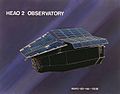 |
Einstein Observatory (HEAO 2) | NASA | 13 Nov 1978 | 26 Apr 1981 | Earth orbit (465–476 km) | [51][52] |
 |
Hakucho (CORSA-b) | ISAS | 21 Feb 1979 | 16 Apr 1985 | Earth orbit (421–433 km) | [53][54][55] |
|
High Energy Astronomy Observatory 3 (HEAO 3) | NASA | 20 Sep 1979 | 29 May 1981 | Earth orbit (486.4–504.9 km) | [9][10][11] |
 |
Tenma (Astro-B) | ISAS | 20 Feb 1983 | 19 Jan 1989 | Earth orbit (489–503 km) | [56][57][58] |
 |
Astron | IKI | 23 Mar 1983 | Jun 1989 | Earth orbit (2,000–200,000 km) | [59][60][61] |
 |
EXOSAT | ESA | 26 May 1983 | 8 Apr 1986 | Earth orbit (347–191,709 km) | [62][63][64] |
 |
Ginga (Astro-C) | ISAS | 5 Feb 1987 | 1 Nov 1991 | Earth orbit (517–708 km) | [65][66][67] |
|
Granat | CNRS & IKI | 1 Dec 1989 | 25 May 1999 | Earth orbit (2,000–200,000 km) | [12][13][14] |
| ROSAT | NASA & DLR | 1 Jun 1990 | 12 Feb 1999 | Re-entry 23 October 2011.[68] Formerly Earth orbit (580 km) |
[69][70][71] | |
 |
Broad Band X-ray Telescope / Astro 1 | NASA | 2 Dec 1990 | 11 Dec 1990 | Earth orbit (500 km) | [72][73] |
 |
Advanced Satellite for Cosmology and Astrophysics (ASCA, Astro-D) | ISAS & NASA | 20 Feb 1993 | 2 Mar 2001 | Earth orbit (523.6–615.3 km) | [74][75] |
 |
Array of Low Energy X-ray Imaging Sensors (Alexis) | LANL | 25 Apr 1993 | 2005 | Earth orbit (749–844 km) | [76][77][78] |
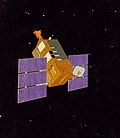 |
Rossi X-ray Timing Explorer (RXTE) | NASA | 30 Dec 1995 | 3 Jan 2012 | Earth orbit (409 km) | [79][80][81] |
 |
BeppoSAX | ASI | 30 Apr 1996 | 30 Apr 2002 | Earth orbit (575–594 km) | [82][83][84] |
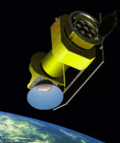 |
A Broadband Imaging X-ray All-sky Survey (ABRIXAS) | DLR | 28 Apr 1999 | 1 Jul 1999 | Earth orbit (549–598 km) | [85][86][87] |
 |
Chandra X-ray Observatory | NASA | 23 Jul 1999 | — | Earth orbit (9,942–140,000 km) | [88][89] |
 |
XMM-Newton | ESA | 10 Dec 1999 | — | Earth orbit (7,365–114,000 km) | [90][91] |
|
High Energy Transient Explorer 2 (HETE 2) | NASA | 9 Oct 2000 | Mar 2008 | Earth orbit (590–650 km) | [21][22][92] |
|
International Gamma Ray Astrophysics Laboratory (INTEGRAL) | ESA | 17 Oct 2002 | 28 Feb 2025 | Earth orbit (639–153,000 km) | [24][25] |
|
Neil Gehrels Swift Observatory | NASA | 20 Nov 2004 | — | Earth orbit (585–604 km) | [26][27] |
 |
Suzaku (Astro-E2) | JAXA & NASA | 10 Jul 2005 | 2 Sep 2015 | Earth orbit (550 km) | [93][94] |
|
Astrorivelatore Gamma ad Immagini Leggero (AGILE) | ISA | 23 Apr 2007 | 18 Jan 2024 | Earth orbit (524–553 km) | [28][29] |
 |
Nuclear Spectroscopic Telescope Array (NuSTAR) | NASA | 13 Jun 2012 | — | Earth orbit (603.5 km) | [95][96] |
 |
AstroSat | ISRO | 28 Sep 2015 | — | Earth orbit (600–650 km) | [97][98][99] |
 |
Hitomi (Astro-H) | JAXA | 17 Feb 2016 | 28 Apr 2016 | Earth orbit (575 km) | [100][101][102] |
 |
Mikhailo Lomonosov | Moscow State University | 28 Apr 2016 | 30 Jun 2018 | Earth orbit (478–493 km) | [103][104] |
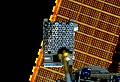 |
Neutron Star Interior Composition Explorer (NICER) | NASA | 7 Jun 2017 | — | International Space Station | [105] |
 |
Hard X-ray Modulation Telescope (HXMT) | CNSA & CAS | 14 Jun 2017 | — | Low Earth orbit (545–554.1 km) | [106] |
 |
Spektr-RG | RSRI & MPE | Jul 13, 2019 | — | Sun-Earth L2 | [107] |
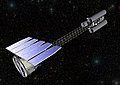 |
Imaging X-ray Polarimetry Explorer (IXPE) | NASA | 9 Dec 2021 | — | Earth orbit (540 km) | [108][109] |
| Lobster Eye Imager for Astronomy (LEIA) | CAS | 27 Jul 2022 | — | Low Earth orbit | [110][111] | |
 |
X-ray Imaging and Spectroscopy Mission (XRISM) | JAXA & NASA | 7 Sep 2023 | — | Earth orbit (550 km) | [112][113] |
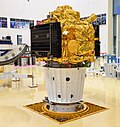 |
X-ray Polarimeter Satellite (XPoSat) | ISRO & RRI | 1 Jan 2024 | — | Earth orbit (638–653 km) | [114][115] |
 |
Einstein Probe | CAS & ESA & MPE | 9 Jan 2024 | — | Earth orbit (581–593 km) | [116] |
 |
Space Variable Objects Monitor (SVOM) | CNSA & CNES | 22 Jun 2024 | — | Earth orbit (625–625 km) | [33][34] |
| BlackCAT | NASA | 11 Jan 2026 | — | Geocentric orbit | [117] |
Ultraviolet
editUltraviolet telescopes make observations at ultraviolet wavelengths, i.e. between approximately 10 and 320 nm. Light at these wavelengths is absorbed by the Earth's atmosphere, so observations at these wavelengths must be performed from the upper atmosphere or from space.[118] Objects emitting ultraviolet radiation include the Sun, other stars and galaxies.[119]
| Photo | Name | Space agency | Launch date | Terminated | Observing location | Ref(s) |
|---|---|---|---|---|---|---|
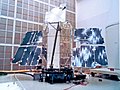 |
OAO-2 (Stargazer) | NASA | 7 Dec 1968 | Jan 1973 | Earth orbit (749–758 km) | [120][121] |
| Orion 1 and Orion 2 Space Observatories | USSR | 19 Apr 1971 (Orion 1); (Orion 2) 18 Dec 1973 | 1971; 1973 | Earth orbit (Orion 1: 200–222 km; Orion 2: 188–247 km) | [122][123] | |
 |
Far Ultraviolet Camera/Spectrograph (UVC) | NASA | 16 Apr 1972 | 23 Apr 1972 | Descartes Highlands on lunar surface | [124] |
 |
OAO-3 Copernicus | NASA | 21 Aug 1972 | Feb 1981 | Earth orbit (713–724 km) | [120] |
|
Astronomical Netherlands Satellite (ANS) | SRON | 30 Aug 1974 | Jun 1976 | Earth orbit (266–1176 km) | [38][39] |
 |
International Ultraviolet Explorer (IUE) | ESA & NASA & SERC | 26 Jan 1978 | 30 Sep 1996 | Earth orbit (32,050–52,254 km) | [125][126] |
|
Astron | IKI | 23 Mar 1983 | Jun 1989 | Earth orbit (2,000–200,000 km) | [59][60][61] |
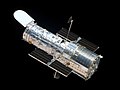 |
Hubble Space Telescope | NASA & ESA | 24 Apr 1990 | — | Earth orbit (586–610 km) | [127] |
|
Broad Band X-ray Telescope / Astro 1 | NASA | 2 Dec 1990 | 11 Dec 1990 | Earth orbit (500 km) | [72][73] |
 |
Extreme Ultraviolet Explorer (EUVE) | NASA | 7 Jun 1992 | 31 Jan 2001 | Earth orbit (515–527 km) | [128][129] |
 |
Astro 2 | NASA | 2 Mar 1995 | 18 Mar 1995 | Earth orbit (349–363 km) | [130][131] |
 |
Far Ultraviolet Spectroscopic Explorer (FUSE) | NASA & CNES & CSA | 24 Jun 1999 | 12 Jul 2007 | Earth orbit (752–767 km) | [132][133] |
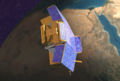 |
Cosmic Hot Interstellar Spectrometer (CHIPS) | NASA | 13 Jan 2003 | 11 Apr 2008 | Earth orbit (578–594 km) | [134][135] |
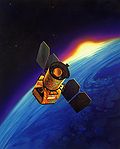 |
Galaxy Evolution Explorer (GALEX) | NASA | 28 Apr 2003 | 28 Jun 2013 | Earth orbit (691–697 km) | .[136][137][138] |
| Korea Advanced Institute of Science and Technology Satellite 4 (Kaistsat 4) | KARI | 27 Sep 2003 | 2007? | Earth orbit (675–695 km) | [139][140] | |
|
Neil Gehrels Swift Observatory (Swift) | NASA | 20 Nov 2004 | — | Earth orbit (585–604 km) | [26][27] |
 |
Interface Region Imaging Spectrograph (IRIS) | NASA | 27 Jun 2013 | — | Earth orbit (387–415 km) | [141][142] |
 |
Hisaki (SPRINT-A) | JAXA | 14 Sep 2013 | 8 December 2023 | Earth orbit (957–1151 km) | [143][144] |
| Venus Spectral Rocket Experiment | NASA | 26 Nov 2013 | reusable | Suborbital to 300 km | [145] | |
| Lunar-based ultraviolet telescope (LUT) | CNSA | 1 Dec 2013 | — | Lunar surface (On Chang'e 3 lander) |
[146] | |
|
AstroSat | ISRO | 28 Sep 2015 | — | Earth orbit (600–650 km) | [98][97][99] |
| Spatial Heterodyne Interferometric Emission Line Dynamics Spectrometer (SHIELDS) | NASA | 19 Apr 2021 | 19 Apr 2021 | Suborbital to 284.8 km | [147] | |
| Colorado Ultraviolet Transit Experiment (CUTE) | NASA, Colorado University | 27 Sep 2021 | nearly Sun-synchronous orbit with a ~90 minute orbital period | [148] | ||
 |
Carruthers Geocorona Observatory | NASA | 24 Sep 2025 | L1 Lagrange point | [149] | |
| SPARCS | NASA | 11 Jan 2026 | — | Geocentric orbit | [150] |
UV ranges listed at Ultraviolet astronomy#Ultraviolet space telescopes.
Visible light
editThe oldest form of astronomy, optical or visible-light astronomy, observes wavelengths of light from approximately 400 to 700 nm.[151] Positioning an optical telescope in space eliminates the distortions and limitations that hamper that ground-based optical telescopes (see Astronomical seeing), providing higher resolution images. Optical telescopes are used to look at planets, stars, galaxies, planetary nebulae and protoplanetary disks, amongst many other things.[152]
| Photo | Name | Space agency | Launch date | Terminated | Location | Ref(s) |
|---|---|---|---|---|---|---|
 |
Hipparcos | ESA | 8 Aug 1989 | Mar 1993 | Earth orbit (223–35,632 km) | [153][154][155] |
|
Hubble Space Telescope | NASA & ESA | 24 Apr 1990 | — | Earth orbit (586.47–610.44 km) | [127] |
| MOST | CSA | 30 Jun 2003 | Mar 2019 | Earth orbit (819–832 km) | [156][157] | |
|
Neil Gehrels Swift Observatory | NASA | 20 Nov 2004 | — | Earth orbit (585–604 km) | [26][27] |
 |
COROT | CNES & ESA | 27 Dec 2006 | 2013 | Earth orbit (872–884 km) | [158][159] |
 |
Kepler | NASA | 6 Mar 2009 | 30 Oct 2018 | Earth-trailing heliocentric orbit | [160][161][162] |

|
BRITE constellation | Austria, Canada, Poland | 25 Feb 2013 - 19 Aug 2014 | — | Earth orbit | [163] |
| Near Earth Object Surveillance Satellite (NEOSSat) | CSA, DRDC | 25 Feb 2013 | — | Sun-synchronous Earth orbit (776–792 km) | [164][165] | |
 |
Gaia (astrometry) | ESA | 19 Dec 2013 | 27 Mar 2025 | Sun-Earth L2 Lagrange point | [166] |
|
AstroSat | ISRO | 28 Sep 2015 | — | Earth orbit (600–650 km) | [97][98][99] |
 |
Transiting Exoplanet Survey Satellite (TESS) | NASA | 18 Apr 2018 | — | High Earth Orbit | [167] |
| CHEOPS | ESA | 18 Dec 2019 | — | Sun-synchronous orbit | [168] | |
| ILO-X | ILOA | 15 Feb 2024 | — | Lunar surface | [169] | |
|
Space Variable Objects Monitor (SVOM) | CNSA & CNES | 22 Jun 2024 | — | Earth orbit (625–625 km) | [33][34] |
Infrared and submillimetre
editInfrared light is of lower energy than visible light, hence is emitted by sources that are either cooler, or moving away from the observer (in present context: Earth) at high speed. As such, the following can be viewed in the infrared: cool stars (including brown dwarves), nebulae, and redshifted galaxies.[170]
| Photo | Name | Space agency | Launch date | Terminated | Location | Ref(s) |
|---|---|---|---|---|---|---|
 |
IRAS | NASA | 25 Jan 1983 | 21 Nov 1983 | Earth orbit (889–903 km) | [171] |
 |
Infrared Telescope in Space | ISAS & NASDA | 18 Mar 1995 | 25 Apr 1995 | Earth orbit (486 km) | [172][173] |
 |
Infrared Space Observatory (ISO) | ESA | 17 Nov 1995 | 16 May 1998 | Earth orbit (1000–70500 km) | [174][175] |
 |
Midcourse Space Experiment (MSX) | USN | 24 Apr 1996 | 26 Feb 1997 | Earth orbit (900 km) | [176] |
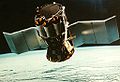 |
Submillimeter Wave Astronomy Satellite (SWAS) | NASA | 6 Dec 1998 | Last used in 2005 | Earth orbit (638–651 km) | [177] |
 |
Wide Field Infrared Explorer (WIRE) | NASA | 5 Mar 1999 | no observations | Re-entered May 10, 2011[178] | [179] |
 |
Spitzer Space Telescope | NASA | 25 Aug 2003 | 30 Jan 2020[180] | Solar orbit (0.98–1.02 AU) | [181] |
 |
Akari (Astro-F) | JAXA | 21 Feb 2006 | 24 Nov 2011[182] | Earth orbit (586.47–610.44 km) | [183] |
 |
Herschel Space Observatory | ESA & NASA | 14 May 2009 [184] | 29 Apr 2013[185] | Sun-Earth L2 Lagrange point | [186][187][188] |
 |
Wide-field Infrared Survey Explorer (WISE) | NASA | 14 Dec 2009 | (hibernation Feb 2011 – Aug 2013) Last contact 31 July 2024 | Earth orbit (500 km) | [189][190][191] |
 |
CHEOPS | ESA | 18 Dec 2019 | — | Sun-synchronous orbit | [168] |
|
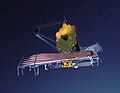
James Webb Space Telescope (JWST) | NASA/ESA/CSA | 25 Dec 2021 | — | Sun–Earth L2 Lagrange point | [192] |
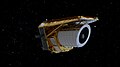 |
Euclid | ESA | 1 Jul 2023 | — | Sun–Earth L2 Lagrange point | [193][194] |
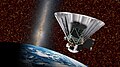 |
SPHEREx | NASA | 11 Mar 2025 | — | Earth orbit | [195] |
 |
Pandora | NASA | 11 Jan 2026 | — | Geocentric orbit | [196] |
Microwave
editMicrowave space telescopes have primarily been used to measure cosmological parameters from the Cosmic Microwave Background. They also measure synchrotron radiation, free-free emission and spinning dust from the Milky Way Galaxy, as well as extragalactic compact sources and galaxy clusters through the Sunyaev-Zel'dovich effect.[197]
| Photo | Name | Space agency | Launch date | Terminated | Location | Ref(s) |
|---|---|---|---|---|---|---|
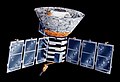 |
Cosmic Background Explorer (COBE) | NASA | 18 Nov 1989 | 23 Dec 1993 | Earth orbit (900 km) | [198][199] |
| Odin | Swedish Space Corporation | 20 Feb 2001 | — | Earth orbit (622 km) | [200][201] | |
 |
WMAP | NASA | 30 Jun 2001 | Oct 2010 | Sun-Earth L2 Lagrange point | [202] |
 |
Planck | ESA | 14 May 2009 | Oct 2013 | Sun-Earth L2 Lagrange point (mission) Heliocentric (Derelict) |
[187][203][204] |
Radio
editAs the atmosphere is transparent for radio waves, radio telescopes in space are most useful for Very Long Baseline Interferometry: doing simultaneous observations of a source with both a satellite and a ground-based telescope and by correlating their signals to simulate a radio telescope the size of the separation between the two telescopes. Typical targets for observations include supernova remnants, masers, gravitational lenses, and starburst galaxies.[citation needed]
| Photo | Name | Space agency | Launch date | Terminated | Location | Ref(s) |
|---|---|---|---|---|---|---|
 |
Highly Advanced Laboratory for Communications and Astronomy (HALCA, VSOP or MUSES-B) | ISAS | 12 Feb 1997 | 30 Nov 2005 | Earth orbit (560–21,400 km) | [205][206][207] |
 |
Spektr-R (RadioAstron) | ASC LPI | 18 Jul 2011 | 11 Jan 2019 | Earth orbit (10,000–390,000 km) | [208][209][210] |
Particle detection
editSpacecraft and space-based modules that do particle detection, looking for cosmic rays and electrons. These can be emitted by the Sun (Solar Energetic Particles), the Milky Way galaxy (Galactic cosmic rays) and extragalactic sources (Extragalactic cosmic rays). There are also Ultra-high-energy cosmic rays from active galactic nuclei, those can be detected by ground-based detectors via their particle showers.
| Photo | Name | Space agency | Launch date | Terminated | Location | Ref(s) |
|---|---|---|---|---|---|---|
|
Proton-1 | USSR | 16 Jul 1965 | 11 Oct 1965 | Earth orbit (589–183 km) | [2] |
|
Proton-2 | USSR | 2 Nov 1965 | 6 Feb 1966 | Earth orbit (637–191 km) | [2] |
|
High Energy Astronomy Observatory 3 (HEAO 3) | NASA | 20 Sep 1979 | 29 May 1981 | Earth orbit (486.4–504.9 km) | [9][10][11] |
 |
SAMPEX | NASA / DE | 3 Jul 1992 | 30 Jun 2004 | Earth orbit (512–687 km) | [211] |
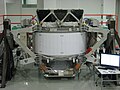 |
Alpha Magnetic Spectrometer 01 (AMS-01) | NASA | 2 Jun 1998 | 12 Jun 1998 | Earth orbit (296 km) | [212] |
 |
Payload for Antimatter Matter Exploration and Light-nuclei Astrophysics (PAMELA) | ISA, INFN, RSA, DLR & SNSB | 15 May 2006 | 7 Feb 2016 | Earth orbit (350–610 km) | [213][214] |
 |
IBEX | NASA | 19 Oct 2008 | — | Earth orbit (86,000–259,000 km) | [215] |
 |
Alpha Magnetic Spectrometer 02 (AMS-02) | NASA | 16 May 2011 | — | Earth orbit (353 km) on ISS | [216] |
| Calorimetric Electron Telescope (CALET) | JAXA | 19 Oct 2015 | — | Earth orbit (353 km) on ISS | [217] | |
| Dark Matter Particle Explorer (DAMPE) | CNSA & CAS | 17 Dec 2015 | — | Earth orbit (500 km) | [218] |
Gravitational waves
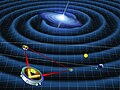
editA type of telescope that detects gravitational waves; ripples in space-time generated by colliding neutron stars or black holes.
| Photo | Name | Space agency | Launch date | Terminated | Location | Ref(s) |
|---|---|---|---|---|---|---|
 |
Lunar Surface Gravimeter | NASA | 7 Dec 1972 | 14 Dec 1972 | Taurus–Littrow | [219] |
Future launches
edit




See also
edit- List of proposed space telescopes
- List of heliophysics missions
- List of solar telescopes
- Lists of telescopes
- Lists of spacecraft
- Great Observatories program
References
edit- ^ "Gamma rays". NASA. Archived from the original on 2008-02-29. Retrieved 2008-03-01.
- ^ a b c d "NASA's HEASARC: Observatories (Proton 1 & Proton 2)". NASA. Archived from the original on 2022-01-23. Retrieved 2017-10-01.
- ^ Proton 4 Archived 2022-01-23 at the Wayback Machine at NASA NSSDC Master Catalog
- ^ "NASA – NSSD – Spacecraft – Trajectory Details (SAS-B)". NASA. Archived from the original on 2016-11-29. Retrieved 2008-02-27.
- ^ "NASA – NSSDC – Spacecraft – Details (SAS-B)". NASA. Archived from the original on 2016-11-29. Retrieved 2008-02-27.
- ^ a b "NASA – NSSD – Spacecraft – Trajectory Details (COS-B)". NASA. Archived from the original on 2016-03-04. Retrieved 2008-02-27.
- ^ a b "NASA – NSSDC – Spacecraft – Details (COS-B)". NASA. Archived from the original on 2016-03-04. Retrieved 2008-02-27.
- ^ a b "ESA – Space Science – Cos-B overview". ESA. Archived from the original on 2012-07-16. Retrieved 2008-02-28.
- ^ a b c "NASA – NSSD – Spacecraft – Trajectory Details (HEAO 3)". NASA. Archived from the original on 2017-02-08. Retrieved 2008-02-27.
- ^ a b c "NASA – NSSDC – Spacecraft – Details (HEAO 3)". NASA. Archived from the original on 2017-02-08. Retrieved 2008-02-27.
- ^ a b c "The High Energy Astrophysics Observatory-3 (HEAO-3)". NASA. 26 June 2003. Archived from the original on 2011-02-08. Retrieved 2008-02-27.
- ^ a b "NASA – NSSD – Spacecraft – Trajectory Details (GRANAT)". NASA. Archived from the original on 2012-01-27. Retrieved 2008-02-27.
- ^ a b "NASA – NSSDC – Spacecraft – Details (GRANAT)". NASA. Archived from the original on 2012-01-27. Retrieved 2008-02-27.
- ^ a b "1999 Reentries" (PDF). The Aerospace Corporation, Center for Orbital and Reentry Debris Studies. Archived from the original (PDF) on 2011-06-11. Retrieved 2008-02-26.
- ^ "The Gamma Satellite". NASA. Archived from the original on 2008-03-09. Retrieved 2008-02-29.
- ^ "NASA – NSSD – Spacecraft – Trajectory Details (Compton Gamma Ray Observatory)". NASA. Archived from the original on 2016-03-04. Retrieved 2008-02-27.
- ^ "NASA – NSSDC – Spacecraft – Details (Compton Gamma Ray Observatory)". NASA. Archived from the original on 2016-03-04. Retrieved 2008-02-27.
- ^ "CGRO Science Support Center". NASA. Archived from the original on 2012-07-18. Retrieved 2008-02-27.
- ^ "Instrumentation: Low Energy Gamma Ray Imager (LEGRI)". Birmingham University. 24 January 2006. Archived from the original on 2018-10-05. Retrieved 2008-02-27.
- ^ "LEGRI". NASA. 4 December 1997. Archived from the original on 17 April 2001. Retrieved 2008-02-28.
- ^ a b "NASA – NSSD – Spacecraft – Trajectory Details (HETE 2)". NASA. Archived from the original on 2016-03-04. Retrieved 2008-02-27.
- ^ a b "NASA – NSSDC – Spacecraft – Details (HETE 2)". NASA. Archived from the original on 2016-03-04. Retrieved 2008-02-27.
- ^ "The High Energy Transient Explorer (HETE-2)". Massachusetts Institute of Technology. 28 March 2007. Archived from the original on 2009-04-02. Retrieved 2008-02-27.
- ^ a b "NASA – NSSD – Spacecraft – Trajectory Details (INTEGRAL)". NASA. Archived from the original on 2012-01-30. Retrieved 2008-02-27.
- ^ a b "NASA – NSSDC – Spacecraft – Details (INTEGRAL)". NASA. Archived from the original on 2012-01-30. Retrieved 2008-02-27.
- ^ a b c d "NASA – NSSD – Spacecraft – Trajectory Details (Swift)". NASA. Archived from the original on 2016-05-09. Retrieved 2008-02-27.
- ^ a b c d "NASA – NSSDC – Spacecraft – Details (Swift)". NASA. Archived from the original on 2016-05-09. Retrieved 2008-02-27.
- ^ a b "NASA – NSSD – Spacecraft – Trajectory Details (AGILE)". NASA. Archived from the original on 2017-02-18. Retrieved 2008-02-27.
- ^ a b "NASA – NSSDC – Spacecraft – Details (AGILE)". NASA. Archived from the original on 2017-02-18. Retrieved 2008-02-27.
- ^ "GLAST Overview – The GLAST Mission". NASA. 19 December 2007. Archived from the original on 2007-08-09. Retrieved 2008-02-27.
- ^ "GAPホームページ" (in Japanese). Kanazawa University. 26 August 2011. Archived from the original on 2017-04-15. Retrieved 2017-01-29.
- ^ "JAXA | Small Solar Power Sail Demonstrator "IKAROS"". JAXA | Japan Aerospace Exploration Agency. Retrieved 2024-04-24.
- ^ a b c "Svom". Retrieved 12 June 2024.
- ^ a b c Xin, Ling (22 June 2024). "China-France satellite launched to monitor most powerful explosions in space". South China Morning Post. Retrieved 22 June 2024.
- ^ "NASA – NSSD – Spacecraft – Trajectory Details (Uhuru)". NASA. Archived from the original on 2018-08-10. Retrieved 2008-02-27.
- ^ "NASA – NSSDC – Spacecraft – Details (Uhuru)". NASA. Archived from the original on 2018-08-10. Retrieved 2008-02-27.
- ^ "The Uhuru Satellite". NASA. Archived from the original on 2008-05-14. Retrieved 2008-02-28.
- ^ a b "NASA – NSSD – Spacecraft – Trajectory Details (ANS)". NASA. Archived from the original on 2017-02-18. Retrieved 2008-02-27.
- ^ a b "NASA – NSSDC – Spacecraft – Details (ANS)". NASA. Archived from the original on 2017-02-18. Retrieved 2008-02-27.
- ^ "The Ariel V Satellite". NASA. Archived from the original on 2021-03-18. Retrieved 2008-02-29.
- ^ "The Ariel V Satellite – About". NASA. Archived from the original on 2006-09-29. Retrieved 2008-02-29.
- ^ "The Aryabhata Satellite". NASA. Retrieved 2008-02-29.
{{cite web}}: CS1 maint: deprecated archival service (link) - ^ "NASA – NSSD – Spacecraft – Trajectory Details (SAS-C)". NASA. Archived from the original on 2016-03-04. Retrieved 2008-02-27.
- ^ "NASA – NSSDC – Spacecraft – Details (SAS-C)". NASA. Archived from the original on 2016-03-04. Retrieved 2008-02-27.
- ^ "The Third Small Astronomy Satellite (SAS-3)". NASA. Archived from the original on 2004-01-13. Retrieved 2008-02-28.
- ^ "NASA – NSSD – Spacecraft – Trajectory Details (CORSA)". NASA. Archived from the original on 2016-03-03. Retrieved 2008-02-27.
- ^ "NASA – NSSDC – Spacecraft – Details (CORSA)". NASA. Archived from the original on 2016-03-03. Retrieved 2008-02-27.
- ^ "NASA – NSSDC – Spacecraft – Details (HEAO 1)". NASA. Archived from the original on 2016-06-20. Retrieved 2008-02-27.
- ^ "The High Energy Astrophysics Observatory-1 – Overview". NASA. Archived from the original on 2008-02-19. Retrieved 2008-02-28.
- ^ "The High Energy Astrophysics Observatory-1 – Mission Overview". NASA. Archived from the original on 2008-03-27. Retrieved 2008-02-28.
- ^ "NASA – NSSD – Spacecraft – Trajectory Details (Einstein Observatory)". NASA. Archived from the original on 2016-06-12. Retrieved 2008-02-27.
- ^ "NASA – NSSDC – Spacecraft – Details (Einstein Observatory)". NASA. Archived from the original on 2016-06-12. Retrieved 2008-02-27.
- ^ "NASA – NSSD – Spacecraft – Trajectory Details (Hakucho)". NASA. Archived from the original on 2016-03-04. Retrieved 2008-02-27.
- ^ "NASA – NSSDC – Spacecraft – Details (Hakucho)". NASA. Archived from the original on 2016-03-04. Retrieved 2008-02-27.
- ^ "The Hakucho (CORSA-B) Satellite". NASA. Archived from the original on 2021-03-18. Retrieved 2008-02-28.
- ^ "NASA – NSSD – Spacecraft – Trajectory Details (Tenma)". NASA. Archived from the original on 2016-03-04. Retrieved 2008-02-27.
- ^ "NASA – NSSDC – Spacecraft – Details (Tenma)". NASA. Archived from the original on 2016-03-04. Retrieved 2008-02-27.
- ^ "Institute of Space and Astronautical Science – JAXA – Tenma". JAXA. Archived from the original on February 8, 2007. Retrieved 2008-02-28.
- ^ a b "NASA – NSSD – Spacecraft – Trajectory Details (ASTRON)". NASA. Archived from the original on 2016-03-03. Retrieved 2008-02-27.
- ^ a b "NASA – NSSDC – Spacecraft – Details (ASTRON)". NASA. Archived from the original on 2016-03-03. Retrieved 2008-02-27.
- ^ a b "The Astron Satellite". NASA. Archived from the original on 2009-08-26. Retrieved 2008-02-28.
- ^ "NASA – NSSD – Spacecraft – Trajectory Details (Exosat)". NASA. Archived from the original on 2016-03-04. Retrieved 2008-02-27.
- ^ "NASA – NSSDC – Spacecraft – Details (Exosat)". NASA. Archived from the original on 2016-03-04. Retrieved 2008-02-27.
- ^ "ESA Science & Technology: Exosat". ESA. Archived from the original on 2013-03-13. Retrieved 2008-02-28.
- ^ "NASA – NSSD – Spacecraft – Trajectory Details (Astro-C)". NASA. Archived from the original on 2016-03-04. Retrieved 2008-02-27.
- ^ "NASA – NSSDC – Spacecraft – Details (Astro-C)". NASA. Archived from the original on 2016-03-04. Retrieved 2008-02-27.
- ^ "The Ginga Observatory". NASA. Archived from the original on 2021-03-18. Retrieved 2008-02-28.
- ^ "ROSAT – latest news". DLR Portal. 25 October 2011. Archived from the original on 15 May 2019. Retrieved 25 October 2011.
- ^ "NASA – NSSD – Spacecraft – Trajectory Details (ROSAT)". NASA. Archived from the original on 2016-04-27. Retrieved 2008-02-27.
- ^ "NASA – NSSDC – Spacecraft – Details (ROSAT)". NASA. Archived from the original on 2016-04-27. Retrieved 2008-02-27.
- ^ "The Roentgen Satellite". NASA. Archived from the original on 2020-10-23. Retrieved 2008-02-28.
- ^ a b "NASA – NSSD – Spacecraft – Trajectory Details (Astro 1)". NASA. Archived from the original on 2017-05-13. Retrieved 2008-02-27.
- ^ a b "NASA – NSSDC – Spacecraft – Details (Astro 1)". NASA. Archived from the original on 2017-05-13. Retrieved 2008-02-27.
- ^ "NASA – NSSD – Spacecraft – Trajectory Details (ASCA)". NASA. Archived from the original on 2016-03-04. Retrieved 2008-02-27.
- ^ "NASA – NSSDC – Spacecraft – Details (ASCA)". NASA. Archived from the original on 2016-03-04. Retrieved 2008-02-27.
- ^ "NASA – NSSD – Spacecraft – Trajectory Details (Alexis)". NASA. Archived from the original on 2017-02-18. Retrieved 2008-02-27.
- ^ "NASA – NSSDC – Spacecraft – Details (Alexis)". NASA. Archived from the original on 2017-02-18. Retrieved 2008-02-27.
- ^ "AeroAstro Returning to Space With Launch of STPSat-1 This Fall". Space.com. 5 June 2006. Archived from the original on June 8, 2006. Retrieved 2008-02-28.
- ^ "The RXTE Mission is Approaching the End of Science Operations". 2012-01-04. Archived from the original on 2004-01-07.
- ^ "NASA – NSSD – Spacecraft – Trajectory Details (X-Ray Timing Explorer)". NASA. Archived from the original on 2016-05-09. Retrieved 2008-02-27.
- ^ "NASA – NSSDC – Spacecraft – Details (X-Ray Timing Explorer)". NASA. Archived from the original on 2016-05-09. Retrieved 2008-02-27.
- ^ "NASA – NSSD – Spacecraft – Trajectory Details (BeppoSAX)". NASA. Archived from the original on 2017-03-29. Retrieved 2008-02-27.
- ^ "NASA – NSSDC – Spacecraft – Details (BeppoSAX)". NASA. Archived from the original on 2017-03-29. Retrieved 2008-02-27.
- ^ "HEASARC: BeppoSAX Guest Observer Facility". NASA. Archived from the original on 2021-04-16. Retrieved 2008-02-28.
- ^ "NASA – NSSD – Spacecraft – Trajectory Details (ABRIXAS)". NASA. Archived from the original on 2017-02-18. Retrieved 2008-02-27.
- ^ "NASA – NSSDC – Spacecraft – Details (ABRIXAS)". NASA. Archived from the original on 2017-02-18. Retrieved 2008-02-27.
- ^ "ABRIXAS". Astronautix.com. Archived from the original on February 8, 2002. Retrieved 2008-02-28.
- ^ "NASA – NSSD – Spacecraft – Trajectory Details (Chandra)". NASA. Archived from the original on 2016-05-22. Retrieved 2008-02-27.
- ^ "NASA – NSSDC – Spacecraft – Details (Chandra)". NASA. Archived from the original on 2016-05-22. Retrieved 2008-02-27.
- ^ "NASA – NSSD – Spacecraft – Trajectory Details (XMM-Newton)". NASA. Archived from the original on 2016-03-04. Retrieved 2008-02-25.
- ^ "NASA – NSSDC – Spacecraft – Details (XMM-Newton)". NASA. Archived from the original on 2016-03-04. Retrieved 2008-02-25.
- ^ "HETE Mission Operations and Status". Massachusetts Institute of Technology. 28 March 2007. Archived from the original on 2020-10-21. Retrieved 2008-02-28.
- ^ "NASA – NSSD – Spacecraft – Trajectory Details (Suzaku)". NASA. Archived from the original on 2016-03-03. Retrieved 2008-02-27.
- ^ "NASA – NSSDC – Spacecraft – Details (Suzaku)". NASA. Archived from the original on 2016-03-03. Retrieved 2008-02-27.
- ^ William Harwood (13 June 2012). "NuSTAR X-ray telescope launched on mission to search for black holes". CBS News. Archived from the original on 17 May 2016. Retrieved 26 July 2012."NuSTAR Quickfacts". California Institute of Technology. Archived from the original on 2008-02-03. Retrieved 2008-02-28.
- ^ F. Harrison; Y. Kim (May 2010). "NusTAR Newsletter" (PDF). NASA JPL. Archived from the original (PDF) on 24 June 2010. Retrieved 24 June 2010.
- ^ a b c "ISRO's dedicated site for the Astrosat mission". ISRO. Archived from the original on 2013-04-22. Retrieved 2015-09-28.
- ^ a b c Ramachandran, R. "India's eye in the sky". Archived from the original on 2015-12-23. Retrieved 2015-10-01.
- ^ a b c Prasad, R. (27 September 2015). "ASTROSAT, India's unique space observatory". The Hindu. TheHindu. Archived from the original on 2015-12-23. Retrieved 2015-09-28.
- ^ "X-ray Astronomy Satellite "ASTRO-H"". JAXA. Archived from the original on 2018-09-30. Retrieved 2015-12-15.
- ^ Gruss, Mike (29 March 2016). "U.S. Air Force: No evidence malfunctioning Japanese satellite was hit by debris". Space News. Archived from the original on 2 July 2023. Retrieved 5 April 2016.
- ^ "X線天文衛星ASTRO-H「ひとみ」異常事象調査報告書A改訂等について". JAXA. 2016-05-31. Archived from the original on 2020-07-11. Retrieved 2018-11-19.
- ^ "Soyuz prepared for first flight from Siberian cosmodrome". Spaceflight Now. 31 January 2016. Archived from the original on 5 March 2016. Retrieved 21 March 2016.
- ^ "Mikhailo Lomonosov". Archived from the original on 2016-05-01. Retrieved 2019-02-08.
- ^ "The Neutron Star Interior Composition Explorer". Archived from the original on 2017-05-13. Retrieved 2021-12-05.
- ^ "Hard X-ray Modulation Telescope". Archived from the original on 2012-06-22.
- ^ ""Спектр-РГ" запустят в 2017 г., несмотря на перенос поставки немецкого телескопа". Archived from the original on 2016-09-19. Retrieved 2016-09-10.
- ^ "IXPE In the News: Launch December 9, 2021". Marshall Space Flight Center. NASA. 29 September 2021. Archived from the original on 7 April 2022. Retrieved 10 November 2021.
- ^ IXPE the Imaging X-ray Polarimetry Explorer. Archived 2018-02-03 at the Wayback Machine 29 August 2017. Proc. SPIE 10397, UV, X-Ray, and Gamma-Ray Space Instrumentation for Astronomy XX, 103970I (29 August 2017); doi:10.1117/12.2275485
- ^ "Einstein Probe Time Domain Astronomical Information Center". ep.bao.ac.cn. Retrieved 28 December 2023.
- ^ "Einstein Probe factsheet". www.esa.int. Retrieved 28 December 2023.
- ^ "About XRISM". NASA. 14 October 2020. Archived from the original on 10 November 2021. Retrieved 10 November 2021.
- ^ Kuninaka, Hitoshi; Maejima, Hironori (August 2, 2018). "X線分光撮像衛星(XRISM)プロジェクト移行審査の結果について" (PDF) (Press release) (in Japanese). JAXA. Retrieved October 12, 2019.
- ^ "ISRO set to launch Shukrayaan and XPoSat missions to exploring the universe's mysteries". Hindustan Times. 7 October 2023. Retrieved 4 November 2023.
- ^ International Space Conference and Exhibition - DAY 3. Confederation of Indian Industry (video). 15 September 2021. Event occurs at 2:08:39–2:09:20. Archived from the original on 2021-12-21. Retrieved 10 November 2021 – via YouTube.
- ^ "Einstein Probe lifts off on a mission to monitor the X-ray sky". www.esa.int.
- ^ Tomaswick, Andy (2025-01-07). "A CubeSat Mission Will Detect X-rays from GRBs and Black-Hole Mergers". Universe Today. Retrieved 2026-01-11.
- ^ A. N. Cox, ed. (2000). Allen's Astrophysical Quantities. New York: Springer-Verlag. ISBN 0-387-98746-0.
- ^ "Ultraviolet Waves". NASA. Archived from the original on 2013-10-17. Retrieved 2008-02-28.
- ^ a b Darling, David. "Orbiting Astronomical Observatory (OAO) in the Internet Encyclopedia of Science". Archived from the original on 2012-02-04. Retrieved 2008-02-28.
- ^ "Orbiting Astronomical Observatory OAO-2". University of Wisconsin–Madison. Archived from the original on 2016-10-02. Retrieved 2008-02-28.
- ^ G. A.Gurzadyan; J.Ohanesyan (1972-09-08). "Observed Energy Distribution of α Lyra and β Cen at 2000–3800 Å". Nature. 239 (5367). Nature.com: 90. Bibcode:1972Natur.239...90G. doi:10.1038/239090a0. S2CID 4265702.
- ^ G. A.Gurzadyan (1974-07-19). "Ultraviolet spectra of Capella". Nature. 250 (5463). Nature.com: 204–205. Bibcode:1974Natur.250..204G. doi:10.1038/250204a0. S2CID 4225026. Archived from the original on 2012-10-19. Retrieved 2012-09-04.
- ^ "Experiment Operations During Apollo EVAs". Archived from the original on 20 February 2013. Retrieved 15 May 2013.
- ^ "ESA Science & Technology: IUE". ESA. Archived from the original on 2013-05-18. Retrieved 2008-02-29.
- ^ "NASA – NSSDC – Spacecraft – Details (IUE)". NASA. Archived from the original on 2016-05-21. Retrieved 2008-02-27.
- ^ a b "NASA – NSSD – Spacecraft – Trajectory Details (Hubble Space Telescope)". NASA. Archived from the original on 2022-04-07. Retrieved 2008-02-27.
- ^ "NASA – NSSD – Spacecraft – Trajectory Details (EUVE)". NASA. Archived from the original on 2012-01-30. Retrieved 2008-02-27.
- ^ "NASA – NSSDC – Spacecraft – Details (EUVE)". NASA. Archived from the original on 2012-01-30. Retrieved 2008-02-27.
- ^ "NASA – NSSD – Spacecraft – Trajectory Details (Astro 2)". NASA. Archived from the original on 2017-05-13. Retrieved 2008-02-27.
- ^ "NASA – NSSDC – Spacecraft – Details (Astro 2)". NASA. Archived from the original on 2017-05-13. Retrieved 2008-02-27.
- ^ "NASA – NSSD – Spacecraft – Trajectory Details (FUSE)". NASA. Archived from the original on 2012-01-26. Retrieved 2008-02-27.
- ^ "NASA – NSSDC – Spacecraft – Details (FUSE)". NASA. Archived from the original on 2012-01-26. Retrieved 2008-02-27.
- ^ "NASA – NSSD – Spacecraft – Trajectory Details (CHIPS)". NASA. Archived from the original on 2016-05-09. Retrieved 2008-02-27.
- ^ "NASA – NSSDC – Spacecraft – Details (CHIPS)". NASA. Archived from the original on 2016-05-09. Retrieved 2008-02-27.
- ^ "NASA – NSSD – Spacecraft – Trajectory Details (GALEX)". NASA. Archived from the original on 2016-12-27. Retrieved 2008-02-27.
- ^ "NASA – NSSDC – Spacecraft – Details (GALEX)". NASA. Archived from the original on 2016-12-27. Retrieved 2008-02-27.
- ^ "NASA Decommissions Its Galaxy Hunter Spacecraft". Archived from the original on 2019-10-26. Retrieved 2013-07-06.
- ^ "NASA – NSSD – Spacecraft – Trajectory Details (Kaistsat 4)". NASA. Archived from the original on 2016-03-04. Retrieved 2008-02-27.
- ^ "NASA – NSSDC – Spacecraft – Details (Kaistsat 4)". NASA. Archived from the original on 2016-03-04. Retrieved 2008-02-27.
- ^ "NASA's Newest Solar Satellite Arrives at Vandenberg AFB for Launch". NASA. 2013-04-17. Archived from the original on 2013-07-03. Retrieved 2013-06-28.
- ^ "NASA's IRIS Mission Updates". NASA. 2013-06-25. Archived from the original on 2017-01-10. Retrieved 2013-06-28.
- ^ "Spectroscopic Planet Observatory for Recognition of Interaction of Atmosphere". JAXA. Archived from the original on 2013-09-10. Retrieved 2013-08-08.
- ^ "HISAKI | SPRINT-A". www.isas.jaxa.jp (in Japanese). Retrieved 2024-04-25.
- ^ "What is VeSpR?". Center for Space Physics, Boston University. November 2013. Archived from the original on 2016-03-04. Retrieved 2013-11-28.
- ^ Andrew Jones (2017-06-05). "China's telescope on the Moon is still working, and could do for 30 years". GBTimes. Archived from the original on 2019-05-17. Retrieved 2013-11-28.
- ^ "SHIELDS Up! NASA Rocket to Survey Our Solar System's Windshield". 15 April 2021. Archived from the original on 15 April 2021. Retrieved 17 April 2021.
- ^ "Home". Colorado Ultraviolet Transit Experiment (CUTE). Retrieved 2024-10-15.
- ^ "Carruthers Geocorona Observatory". NASA.
- ^ "SPARCS". sparcs.asu.edu. Retrieved 2021-12-18.
- ^ P. Moore (1997). Philip's Atlas of the Universe. Great Britain: George Philis Limited. ISBN 0-540-07465-9.
- ^ "HubbleSite – The Telescope – Hubble Essentials". NASA. Archived from the original on 2016-03-03. Retrieved 2008-03-01.
- ^ "NASA – NSSD – Spacecraft – Trajectory Details (Hipparcus)". NASA. Archived from the original on 2016-09-08. Retrieved 2008-02-27.
- ^ "NASA – NSSDC – Spacecraft – Details (Hipparcus)". NASA. Archived from the original on 2016-09-08. Retrieved 2008-02-27.
- ^ "The Hipparcos Space Astrometry Mission". ESA. Archived from the original on 2016-08-01. Retrieved 2008-02-28.
- ^ "NASA – NSSD – Spacecraft – Trajectory Details (MOST)". NASA. Archived from the original on 2016-03-03. Retrieved 2008-02-27.
- ^ "NASA – NSSDC – Spacecraft – Details (MOST)". NASA. Archived from the original on 2016-03-03. Retrieved 2008-02-27.
- ^ "NASA – NSSD – Spacecraft – Trajectory Details (COROT)". NASA. Archived from the original on 2016-03-03. Retrieved 2008-02-27.
- ^ "NASA – NSSDC – Spacecraft – Details (COROT)". NASA. Archived from the original on 2016-03-03. Retrieved 2008-02-27.
- ^ Staff writers (7 March 2009). "Nasa launches Earth hunter probe". BBC News. Archived from the original on 2017-12-18. Retrieved 2009-03-14.
- ^ "Kepler Mission". NASA. Archived from the original on 2014-03-06. Retrieved 2008-02-28.
- ^ "Kepler – About – Mission News". NASA. Archived from the original on July 26, 2007. Retrieved 2008-02-28.
- ^ "BRITE-Constellation". Archived from the original on 2018-05-29. Retrieved 2015-03-09.
- ^ Kramer, Miriam (February 25, 2013). "Indian Rocket Launches Asteroid-Hunting Satellites, Tiny Space Telescopes". Space.com. Archived from the original on August 18, 2017. Retrieved February 25, 2013.
- ^ "NEOSSAT Satellite details 2013-009D NORAD 39089". N2YO. January 24, 2015. Archived from the original on September 19, 2017. Retrieved January 25, 2015.
- ^ "ESA – Space Science – Gaia overview". ESA. Archived from the original on 2013-07-19. Retrieved 2008-02-28.
- ^ "TESS – Transiting Exoplanet Survey Satellite". NASA. Archived from the original on 2018-04-18. Retrieved 2016-02-26.
- ^ a b "Flight VS23: Soyuz lifts off from the Spaceport in French Guiana". Arianespace. December 28, 2019. Archived from the original on February 26, 2020. Retrieved May 25, 2020.
- ^ "ILO-X news release". ILOA. 26 September 2023.
- ^ "Cool Cosmos". California Institute of Technology. Archived from the original on 2018-10-21. Retrieved 2008-03-01.
- ^ "NASA – NSSD – Spacecraft – Trajectory Details (IRAS)". NASA. Archived from the original on 2020-10-29. Retrieved 2008-02-27.
- ^ "IRTS Home Page". Institute of Space and Astronautical Science. Archived from the original on 2012-02-10. Retrieved 2008-02-29.
- ^ Murakami, Hiroshi; Freund, M. M.; Ganga, K.; Guo, H.; Hirao, T.; Hiromoto, N.; Kawada, M.; Lange, A. E.; et al. (1996). "The IRTS (Infrared Telescope in Space) Mission". Publications of the Astronomical Society of Japan. 48 (5): L41–L46. Bibcode:1996PASJ...48L..41M. doi:10.1093/pasj/48.5.l41.
- ^ "NASA – NSSD – Spacecraft – Trajectory Details (ISO)". NASA. Archived from the original on 2013-03-20. Retrieved 2008-02-27.
- ^ "ESA Science & Technology: ISO". ESA. Archived from the original on 2013-06-05. Retrieved 2008-02-28.
- ^ "MSX Project Page". Infrared Processing and Analysis Center. Archived from the original on 2018-01-14. Retrieved 2008-02-29.
- ^ "NASA – NSSD – Spacecraft – Trajectory Details (SWAS)". NASA. Archived from the original on 2016-07-31. Retrieved 2008-02-27.
- ^ WIRE Web Team. "Caltech: WIRE". Ipac.caltech.edu. Archived from the original on 2018-06-20. Retrieved 2012-09-04.
- ^ "NASA – NSSDC – Spacecraft – Details (WIRE)". NASA. Archived from the original on 2017-05-14. Retrieved 2008-02-27.
- ^ O'Callaghan, Jonathan. "Ending in 2020, NASA's Infrared Spitzer Mission Leaves a Gap in Astronomy". Scientific American. Archived from the original on 2021-02-12. Retrieved 2020-02-01.
- ^ "NASA – NSSD – Spacecraft – Trajectory Details (Spitzer)". NASA. Archived from the original on 2016-12-05. Retrieved 2008-02-27.
- ^ "赤外線天文衛星「あかり」(ASTRO-F)の運用終了について" (in Japanese). JAXA. 24 November 2011. Archived from the original on 24 December 2015. Retrieved 24 November 2011.
- ^ "NASA – NSSD – Spacecraft – Trajectory Details (Akari)". NASA. Archived from the original on 2017-02-18. Retrieved 2008-02-27.
- ^ "Jet Propulsion Laboratory Herschel Mission News". Herschel.jpl.nasa.gov. Archived from the original on 2016-11-29. Retrieved 2009-08-19.
- ^ Amos, Jonathan (29 April 2013). "Herschel space telescope finishes mission". BBC News. Archived from the original on 21 February 2019. Retrieved 29 April 2013.
- ^ "NASA – NSSDC – Spacecraft – Details (Herschel Space Observatory)". NASA. Archived from the original on 2008-06-17. Retrieved 2008-02-27.
- ^ a b "Planck – Home Page". ESA. 6 March 2008. Archived from the original on 2008-08-06. Retrieved 2008-03-15.
- ^ "Herschel Science Centre – A short Herschel mission overview". ESA. 20 November 2007. Archived from the original on 2018-07-11. Retrieved 2008-03-15.
- ^ "WISE: Wide-Field Infrared Survey Explorer". University of California, Los Angeles. Archived from the original on 2010-01-12. Retrieved 2008-03-03.
- ^ "WISE – Mapping the Infrared Sky" (PDF). NASA. Archived from the original (PDF) on 2007-07-08. Retrieved 2008-03-03.
- ^ "Wide-field Infrared Survey Explorer". NASA. Archived from the original on 2009-11-09. Retrieved 2009-11-30.
- ^ "Targeted launch date for Webb: 18 December 2021". ESA. 8 September 2021. Archived from the original on 30 October 2021. Retrieved 10 November 2021.
- ^ @AschbacherJosef (25 October 2021). "Heads of Agencies Plenary is a highlight of IAC, being a chance to summarize for the audience where we are & where we are going. Today was particularly special for me, my 1st as DG. We have huge milestones coming up: JWST, Galileo, JUICE, Vega-C, Ariane-6 and much more. #IAC2021" (Tweet). Retrieved 10 November 2021 – via Twitter.
- ^ "ESA Science & Technology - Missions". ESA. 8 November 2021. Archived from the original on 3 March 2022. Retrieved 10 November 2021.
- ^ "A New NASA Space Telescope, SPHEREx, Is Moving Ahead". JPL. NASA. 5 January 2021. Archived from the original on 10 November 2021. Retrieved 10 November 2021.
- ^ "Pandora mission to study stars and exoplanets continues toward flight". llnl.gov. Retrieved 17 November 2022.
- ^ Lachièze-Rey, M.; Gunzig, E. (1999). The Cosmological Background Radiation. Cambridge: Cambridge University Press. pp. 168–9. ISBN 0521574374.
- ^ "NASA – NSSD – Spacecraft – Trajectory Details (COBE)". NASA. Archived from the original on 2016-05-12. Retrieved 2008-02-27.
- ^ "NASA – NSSDC – Spacecraft – Details (COBE)". NASA. Archived from the original on 2016-05-12. Retrieved 2008-02-27.
- ^ "NASA – NSSD – Spacecraft – Trajectory Details (Odin)". NASA. Archived from the original on 2016-03-03. Retrieved 2008-02-27.
- ^ "NASA – NSSDC – Spacecraft – Details (Odin)". NASA. Archived from the original on 2016-03-03. Retrieved 2008-02-27.
- ^ "NASA – NSSDC – Spacecraft – Details (WMAP)". NASA. Archived from the original on 2016-04-10. Retrieved 2008-02-27.
- ^ "NASA – NSSDC – Spacecraft – Details (PLANCK)". NASA. Archived from the original on 2007-12-12. Retrieved 2008-02-27.
- ^ "Planck – Home Page". ESA. Archived from the original on 2008-08-06. Retrieved 2008-02-28.
- ^ "NASA – NSSD – Spacecraft – Trajectory Details (HALCA)". NASA. Archived from the original on 2016-01-06. Retrieved 2008-02-27.
- ^ "NASA – NSSDC – Spacecraft – Details (HALCA)". NASA. Archived from the original on 2016-01-06. Retrieved 2008-02-27.
- ^ "Minutes of VSOP-2 Tracking Station Meeting, 10/31-11/01/06" (PDF). National Astronomical Observatory of Japan. Archived from the original (PDF) on 2009-03-20. Retrieved 2008-02-28.
- ^ "Description of the RadioAstron project". Russian Space Research Institute. Archived from the original on 2008-06-06. Retrieved 2008-02-28.
- ^ "Description of the RadioAstron project – Orbit". Russian Space Research Institute. Archived from the original on 2008-06-06. Retrieved 2008-02-28.
- ^ "RadioAstron Newsletter Number 1, January 1, 2010" (PDF). Russian Astro Space Center. January 1, 2010. Archived (PDF) from the original on April 17, 2023. Retrieved 2023-04-30.
- ^ "SAMPEX Data Center". Srl.caltech.edu. Archived from the original on 2018-09-23. Retrieved 2012-09-04.
- ^ AMS Collaboration; Aguilar, M.; Alcaraz, J.; Allaby, J.; Alpat, B.; Ambrosi, G.; Anderhub, H.; Ao, L.; et al. (August 2002). "The Alpha Magnetic Spectrometer (AMS) on the International Space Station: Part I – results from the test flight on the space shuttle". Physics Reports. 366 (6): 331–405. Bibcode:2002PhR...366..331A. doi:10.1016/S0370-1573(02)00013-3. hdl:2078.1/72661. S2CID 122726107.
- ^ "PAMELA Mission Official Website". Istituto Nazionale di Fisica Nucleare. Archived from the original on 2018-09-04. Retrieved 2008-03-09.
- ^ "PAMELA Mission Official Website – Partners". Istituto Nazionale di Fisica Nucleare. Archived from the original on 2018-11-11. Retrieved 2008-03-09.
- ^ Ray, Justin (October 19, 2008). "Mission Status Center: Pegasus/IBEX". Spaceflight Now. Archived from the original on September 4, 2018. Retrieved November 27, 2009.
- ^ "Alpha Magnetic Spectrometer – 02 (AMS-02)". NASA. 2009-12-18. Archived from the original on 2009-08-16. Retrieved 2009-12-24.
- ^ "CALET". Goddard Space Flight Center. 2024-08-26. Retrieved 2024-11-04.
- ^ "DArk Matter Particle Explorer". Archived from the original on 2018-07-17. Retrieved 2013-08-15.
- ^ "Lunar Surface Gravimeter on Apollo 17". NASA. Archived from the original on 2023-06-08. Retrieved 2023-08-15.
- ^ "U of A-led NASA Aspera mission hits spacecraft milestone | Steward Observatory". astro.arizona.edu. Retrieved 2026-01-12.
- ^ Sawczynec, Erica (2024-09-23). "High-Resolution Optical Spectroscopy from a CubeSat? It's more likely than you think!". astrobites.org. Retrieved 2026-01-12.
- ^ "The CubeSpec mission: enabling spectroscopy from a CubeSat platform". Sorbonne Université (in French). Retrieved 2026-01-12.
- ^ Chang, Hsiang-Kuang; Lin, Chi-Hsun; Tsao, Che-Chih; Chu, Che-Yen; Yang, Shun-Chia; Huang, Chien-You; Wang, Chao-Hsi; Su, Tze-Hsiang; Chung, Yun-Hsin; Chang, Yung-Wei; Gong, Zi-Jun; Hsiang, Jr-Yue; Lai, Keng-Li; Lin, Tsu-Hsuan; Lu, Chia-Yu (2022-01-15). "The Gamma-ray Transients Monitor (GTM) on board Formosat-8B and its GRB detection efficiency". Advances in Space Research. 69 (2): 1249–1255. Bibcode:2022AdSpR..69.1249C. doi:10.1016/j.asr.2021.10.044. ISSN 0273-1177.
- ^ Foust, Jeff (2026-01-08). "Roman Space Telescope on track for September launch". Space News. Retrieved 2026-01-09.
- ^ "China's giant Xuntian space telescope faces further delay until late 2026". South China Morning Post. 16 May 2024. Retrieved 23 June 2024.
- ^ Jones, Andrew (28 February 2023). "China to expand its space station, international astronaut selection underway". SpaceNews. Archived from the original on 2 July 2023. Retrieved 12 March 2023.
- ^ "Flagship Chinese Space Telescope to Unravel Cosmic Mysteries". Chinese Academy of Sciences. 7 May 2022. Archived from the original on 24 May 2022. Retrieved 21 July 2022.
- ^ "PLATO". CNES. 18 February 2026. Retrieved 18 March 2026.
PLATO is scheduled for launch by an Ariane 62 from Kourou in January 2027 to the L2 Lagrange point 1.5 million kilometres from Earth, in the direction away from the Sun.
- ^ Amos, Jonathan (20 February 2014). "European Space Agency picks Plato planet-hunting mission". BBC News. Archived from the original on 15 November 2019. Retrieved 15 November 2019.
A telescope to find rocky worlds around other stars has been selected for launch by the European Space Agency's (Esa) Science Policy Committee. Known as Plato, the mission should launch on a Soyuz rocket in 2024.
- ^ "NASA Selects Gamma-ray Telescope to Chart Milky Way Evolution". NASA. 18 October 2021. Retrieved 21 October 2021.
 This article incorporates text from this source, which is in the public domain.
- ^ Talbert, Tricia (11 June 2021). "NASA Approves Asteroid Hunting Space Telescope to Continue Development". NASA. Retrieved 11 June 2021. This article incorporates text from this source, which is in the public domain.
- ^ "Ariel moves from blueprint to reality". ESA. 12 November 2020. Archived from the original on 16 April 2021. Retrieved 20 November 2020.
- ^ "New NASA Mission will Study Ultraviolet Sky, Stars, Stellar Explosions - NASA". NASA. Retrieved 31 October 2024.
- ^ "Selection of F2 - Call for missions 2021 - Cosmos". Call for missions 2021. Archived from the original on 2025-08-13. Retrieved 2026-01-12.
- ^ Arrakihs Mission Consortium (2023). Arrakihs mission Phase 2 proposal (Report). Instituto de Física de Cantabria. doi:10.5281/ZENODO.8321229.
- ^ Cyranoski, David (9 March 2016). "Chinese gravitational-wave hunt hits crunch time". Nature. 531 (7593): 150–151. Bibcode:2016Natur.531..150C. doi:10.1038/531150a. PMID 26961634. Retrieved 23 June 2024.
- ^ Voices, EarthSky (2023-02-19). "Detecting asteroids near the sun with NEOMIR". Retrieved 2026-01-12.
- ^ Licandro, Javier; Conversi, Luca; Delbo, Marco; Fitzsimmons, Alan; Muinonen, Karri; Mueller, Thomas; Popescu, Marcel (2024-07-03). NEOMIR: a space based infrared mission for NEO detection, characterization and early warning (Report). Copernicus Meetings. doi:10.5194/epsc2024-882.
- ^ "Athena | Mission Summary". ESA. 8 November 2021. Archived from the original on 10 November 2021. Retrieved 10 November 2021.
- ^ "LISA | Mission Summary". ESA. 8 November 2021. Archived from the original on 10 November 2021. Retrieved 10 November 2021.
 Media related to Space telescopes at Wikimedia Commons


